The best spring cleanups are sequence-driven. Start in the wrong order and you lose time, miss debris zones, and pay twice for labor: once for the cleanup and once for the re-do. This guide is how local crews actually work through a Pottstown-area property in early spring, and why each step matters.
If you're hiring a crew or planning to tackle it yourself, the most useful thing isn't a list of tasks. It's the order. Get that right and the rest follows.
"A spring cleanup isn't really about cleaning. It's about resetting the property to a state weekly maintenance can keep up with.
Why sequence matters more than effort.
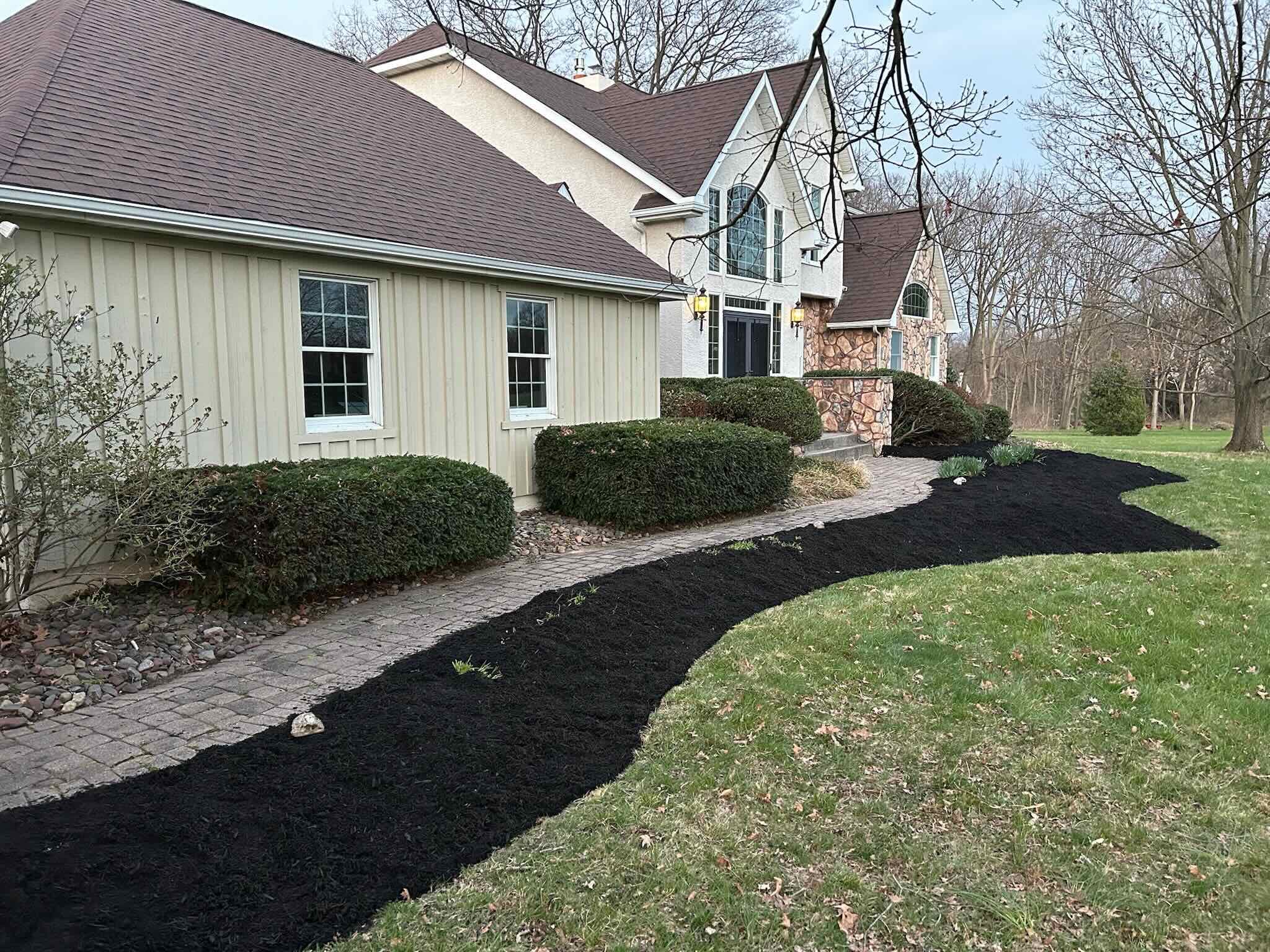
Most yards in Pottstown, Royersford, and the surrounding area share the same shape after winter: leaves lodged against fences, broken stick debris in beds, mulch that's been thinned by snow and wind, and bed edges that have softened or disappeared.
You can attack any of these first. But each one constrains the next. Fresh mulch over an unedged bed looks like it was applied by someone who didn't care. Bed cleanup over leaves still on the lawn means you'll redo bed work twice. Trim a hedge first and the clippings end up in the beds you cleaned yesterday.
The fix is a fixed sequence. Five steps, every property, regardless of size.
Start with debris and access.
Walk the full property before you do anything. Flag downed limbs, soft turf zones, and anywhere the truck or equipment will struggle to reach. This walk takes ten minutes and saves the day.
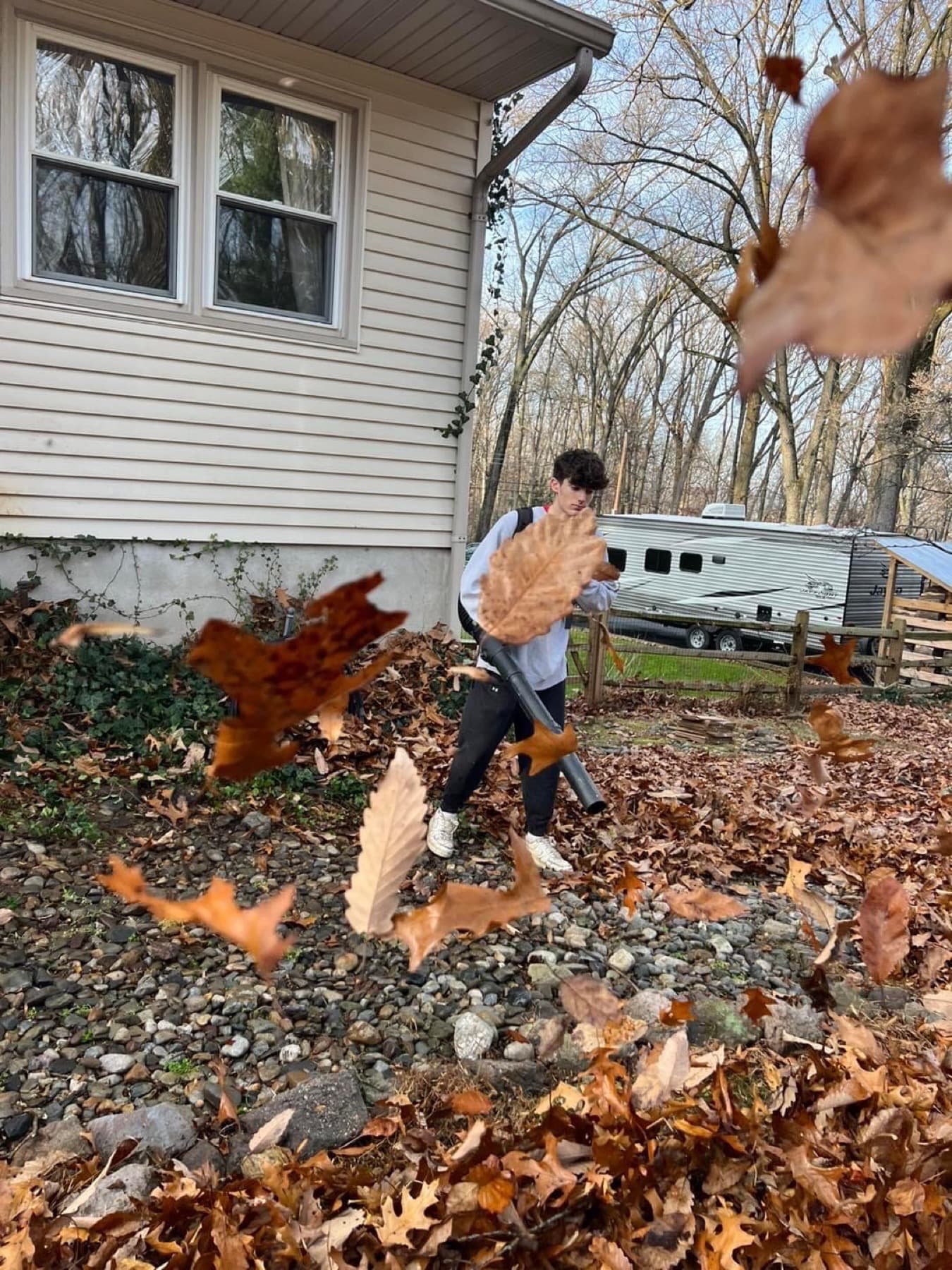
Then clear heavy debris first: fallen branches, large stick clusters, anything the blower can't move. Cleanup of fine leaf debris and bed work both produce dust and small particles you don't want resettling on a lawn that's still being raked.
- Branches and large limbs, either hauled or chipped on-site
- Leaf accumulation in corners, against fences, and in window wells
- Decomposing matter from last fall in low spots
- Trash and yard signs left over from winter
- Old mulch fragments in pathways and lawn edges
Reset bed edges before mulch.
This is the step that separates a real cleanup from a surface job. Edges define how the entire property reads. If edging is skipped, fresh mulch will still look unfinished because the boundary between bed and lawn is the visual signal that someone owns this space.
Complete bed cleanup before installing any new material. That means weeding, debris removal, and re-cutting the edge lines. Skipping the weeding step means weeds and dead growth get trapped under mulch, then come back through within weeks.
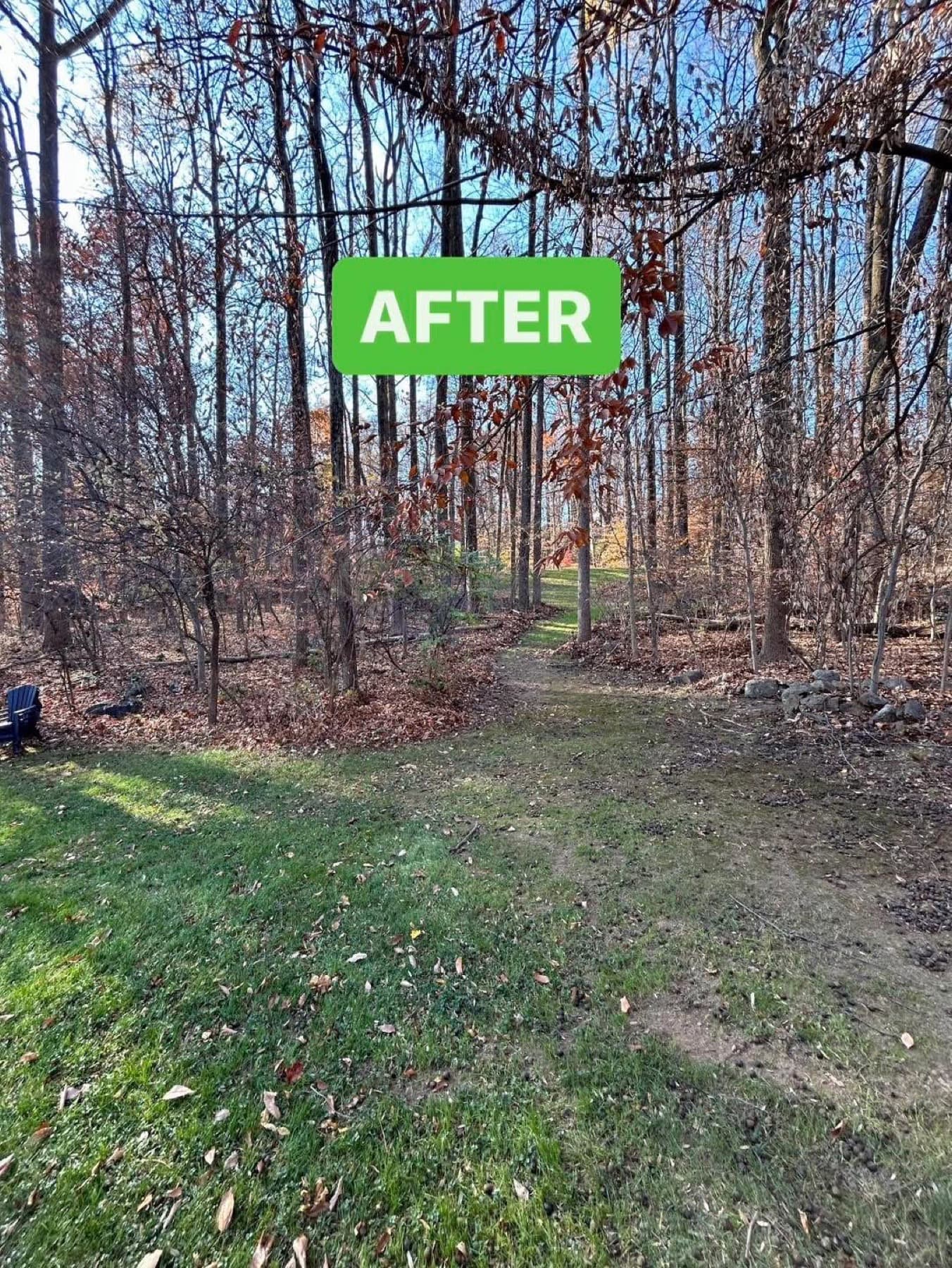
Selective trimming and detail pass.
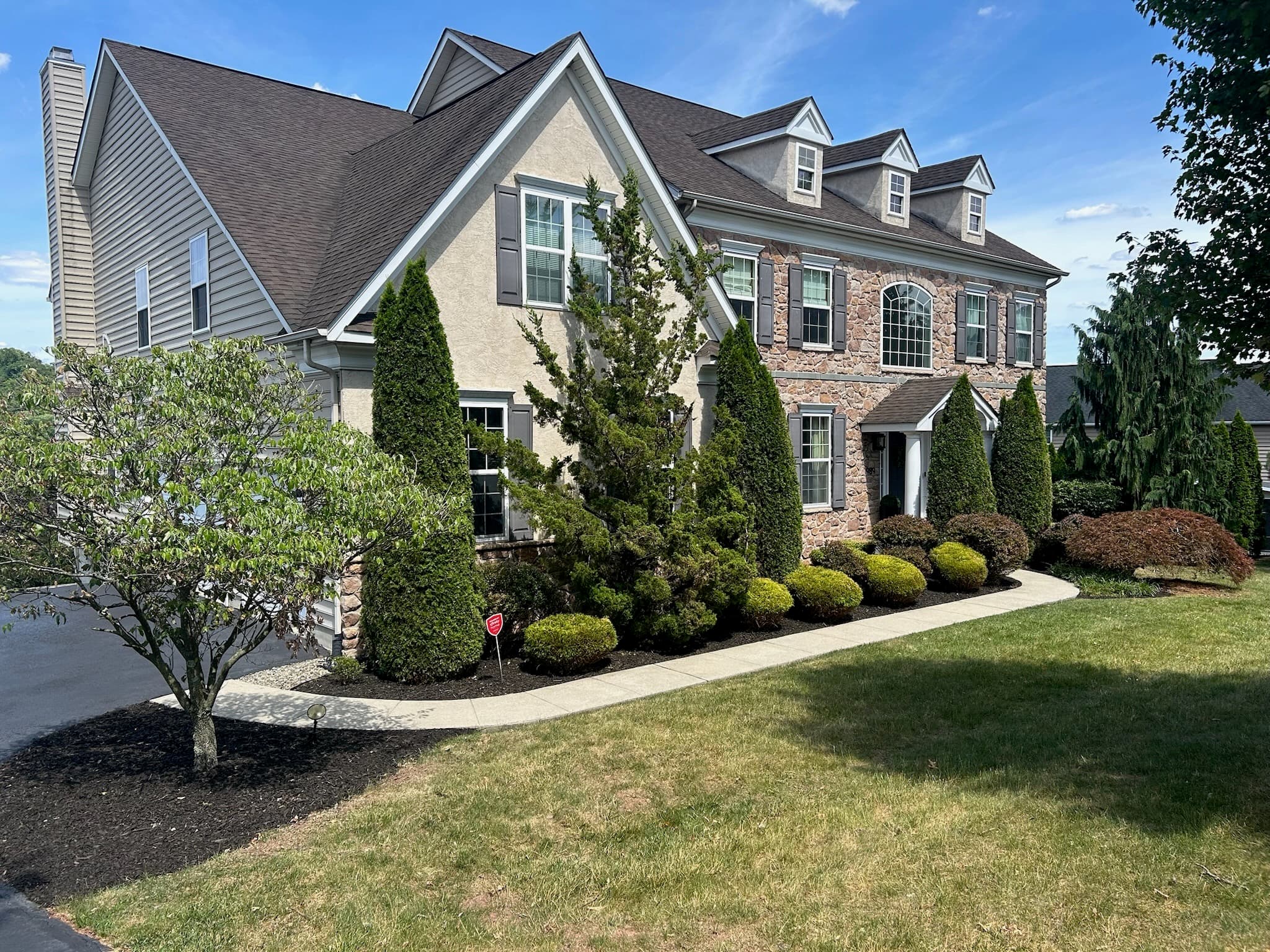
Hedges, shrubs, and ornamentals often look fine in winter and rough by April. A spring cleanup is the right time to do a selective pass, not a full shape, that takes off winter damage, dead branches, and the most obvious overgrowth.
Save the major shape work for late spring or early summer when you can see the new growth pattern. Cutting too aggressively in March can stress plants right when they're trying to push.
Close out with haul-away and walkthrough.
A cleanup isn't done until the debris leaves the property. This is where some homeowners get burned: a crew finishes the visible work, leaves piles of debris in the back corner, and considers it a job. It's not.
A short final walkthrough with the homeowner, even a five-minute one, catches missed corners and ensures expectations match the finished result. We do this on every job. It's the cheapest insurance policy in the business.
Common Pottstown-area mistakes.
A few things we see consistently across Montgomery, Chester, and Berks County properties, usually from DIY work or from quick-flip crews moving too fast:
- Mulching too early. Beds aren't fully cleaned, weeds get sealed in, and the property looks finished for two weeks before everything pushes through.
- Skipping edges. The single highest-impact, lowest-effort step. Skipping it makes everything else look worse.
- Over-trimming in March. Stress before the growth window means dead-looking shrubs through May.
- Leaving debris on-site. Saves the crew an hour. Costs the homeowner the satisfaction of a finished result.
If you're getting quotes from local crews, ask how each of these is handled. Anyone who can answer concretely is probably worth the conversation. Anyone who waves it off probably isn't.